Scouting is a path that builds skills, confidence, and responsibility that last a lifetime. From the first troop meeting to major service projects, Scouts learn teamwork, problem-solving, and how to make a real difference. These experiences strengthen Scouts and ripple outward, shaping families, neighborhoods, and entire communities.
In this article, you’ll discover how Scouts become leaders and active citizens, the ways their service projects leave a lasting mark, and why their influence continues long after they hang up their uniforms. We’ll explore research-backed insights, practical examples, and the unique ways Scouting empowers young people to build better communities.
The Building Blocks of Community Influence
Scouting America programs are designed to create young leaders who understand their role in strengthening communities. The foundation starts with four core building blocks that work together to develop capable, service-minded citizens. Research from Baylor University shows that longer Boy Scout membership directly correlates with higher civic engagement throughout adulthood, with confidence and competence serving as key mediating factors.
Leadership Development: Learning to Guide Others
Scouts learn to lead both peers and projects, gaining confidence in decision-making and communication. The Introduction to Leadership Skills for Troops (ILST) training provides the structured foundation for this development. When Scouts accept leadership positions such as Patrol Leader or Senior Patrol Leader, they immediately begin practicing real leadership skills with their peers.
The most powerful leadership lessons often happen in quiet moments. A Scout helping a nervous new member tie their first knot, or a Patrol Leader calmly redirecting a meeting that’s gotten off track—these everyday interactions build the emotional intelligence and practical skills that define effective community leaders. Many Eagle Scouts later report that these small, consistent leadership experiences taught them more about guiding others than any single major event.
This approach to leadership development creates authentic opportunities. Unlike simulated leadership exercises, Scouts face real consequences and real rewards when leading their peers through camping trips, service projects, and troop activities.
Service Mindset: Building the Habit of Giving Back
Regular community service, from food drives to environmental cleanups, creates a lifelong pattern of contributing to society. The BSA’s Positive Impact Manual emphasizes that Scouts develop civic and citizenship skills specifically through participation in community service. This isn’t just about completing service hours; it’s about understanding how individual actions create collective impact.
Scouts tackle projects that address real community needs. They might organize food drives for local pantries, clean up hiking trails, or help elderly neighbors with yard work. Each project teaches Scouts to see beyond their immediate circle and recognize their responsibility to contribute to the common good. This service mindset becomes deeply ingrained through repeated practice and positive reinforcement.
The video below shows how Scouting programs systematically develop leadership skills that directly support effective community service:
This training video from Scouting Magazine explains the foundational ILST program that prepares Scouts for leadership roles. Key insights include understanding different leadership positions (0:38-3:00), the cyclical nature of leadership development as Scouts change roles (5:40-7:00), and practical guidance for implementing the training (22:15-23:10). The systematic approach shown here directly supports Scouts’ ability to plan and execute meaningful community service projects.
Problem-Solving Skills: Tackling Real-World Challenges
Scouts regularly face situations that require creative thinking, resource management, and collaborative problem-solving. Whether they’re planning a 50-mile backpacking trip, organizing a community service project, or resolving conflicts within their patrol, Scouts learn to break down complex challenges into manageable steps.
The outdoor program provides particularly rich problem-solving opportunities. When a Scout’s tent floods during a rainstorm, or when a patrol realizes they’ve forgotten their camp stove, they must think quickly and work together to find solutions. These experiences teach Scouts that most problems have multiple solutions, and that persistence combined with teamwork usually leads to success.
Research from Capital Area Council shows that Scouting specifically develops the “six Cs” of 21st-century education: critical thinking and problem solving, collaboration, communication, creativity, character, and citizenship. This comprehensive skill development prepares Scouts to address complex community challenges throughout their lives.
Active Citizenship: Understanding Your Role in Society
Participation in civic activities and public service helps Scouts understand their role as engaged citizens. The Citizenship in the Community merit badge requires Scouts to attend local government meetings, interview community leaders, and complete service projects that address local needs. This hands-on civic education creates informed, engaged citizens who understand how democratic processes work.
Scouts learn that citizenship extends beyond voting. They discover how to research issues, communicate with elected officials, and organize community responses to local challenges. Many troops organize voter registration drives, participate in community clean-up days, or support local charities through ongoing service partnerships.
| Building Block | Key Skills Developed | Community Impact |
|---|---|---|
| Leadership Development | Decision-making, communication, team management | Confident leaders who can guide community initiatives |
| Service Mindset | Empathy, project planning, collaborative work | Citizens committed to addressing community needs |
| Problem-Solving Skills | Critical thinking, resource management, adaptability | Innovative approaches to community challenges |
| Active Citizenship | Civic knowledge, advocacy, democratic participation | Informed voters and engaged community members |
These four building blocks work together to create young people who see themselves as active contributors to their communities. Research consistently shows that former Scouts demonstrate higher levels of civic engagement, volunteer more frequently, and take on leadership roles in their communities at significantly higher rates than their non-Scout peers. The combination of practical skills, service experience, and civic education creates a foundation for lifelong community involvement.
The effectiveness of this approach lies in its integration. Scouts don’t just learn about leadership. They practice it while organizing service projects. They don’t just study citizenship. They experience it by working with local government and community organizations. This hands-on, integrated approach creates deep learning that shapes how Scouts see their role in society for decades to come.
Lifelong Habits: How Scouting Shapes Adults
The impact of Scouting doesn’t end when a Scout ages out of the program. Research consistently shows that former Scouts carry the values, skills, and habits they developed throughout their adult lives. A comprehensive study published in the Journal of Nonprofit and Voluntary Sector Quarterly found that the duration of participation in Scouting directly correlates with higher levels of civic engagement across four key areas: volunteering, community involvement, political participation, and charitable giving.
Former Scouts demonstrate measurably different patterns of community engagement compared to their peers. They vote at higher rates, volunteer more frequently, and are significantly more likely to take leadership roles in community organizations. According to research from Baylor University’s Institute for Studies of Religion, adults who participated in Scouting show enhanced decision-making abilities, stronger ethical frameworks, and more robust personal relationships that extend well into their professional and personal lives.
The social networks built through Scouting create lasting connections that strengthen entire communities. Researchers describe this as “social capital,” which refers to networks of trust and cooperation that make neighborhoods more resilient. Former Scouts often maintain friendships formed during their youth, creating webs of mutual support that benefit not just individuals but entire neighborhoods and organizations.
Many adults who were Scouts continue serving as coaches, mentors, school board members, and volunteers. This multiplies the impact of Scouting, since one Scout’s experience often benefits dozens of others.
| Scout Experience | Impact in Adulthood |
|---|---|
| Leadership roles | Increased workplace and community leadership |
| Service projects | Ongoing volunteering and civic participation |
| Teamwork skills | Improved collaboration in professional and personal life |
One of the most powerful aspects of Scouting’s long-term impact is the cycle it creates. Adults who return to Scouting as leaders or volunteers often report gaining just as much from the experience as the youth they mentor. Research from SUNY Brockport found that adult volunteers in youth programs experience increased sense of purpose, stronger community connections, and enhanced personal fulfillment. This reciprocal relationship strengthens both the individual and the program, creating sustainable communities of support that span generations.
The confidence and competence developed through Scouting serve as what researchers call “mediating factors.” Scouting helps shape adults who actively look for ways to improve their communities. This isn’t just about individual success; it’s about building the kind of engaged, capable adults who strengthen democracy and community life for everyone.
The Ripple Effect: Community Projects That Last
Scouts are known for their hands-on service projects, many of which have a lasting impact on local communities. These projects create benefits that extend far beyond the initial completion date, often inspiring others to take action and improving quality of life for years to come.
Environmental Initiatives
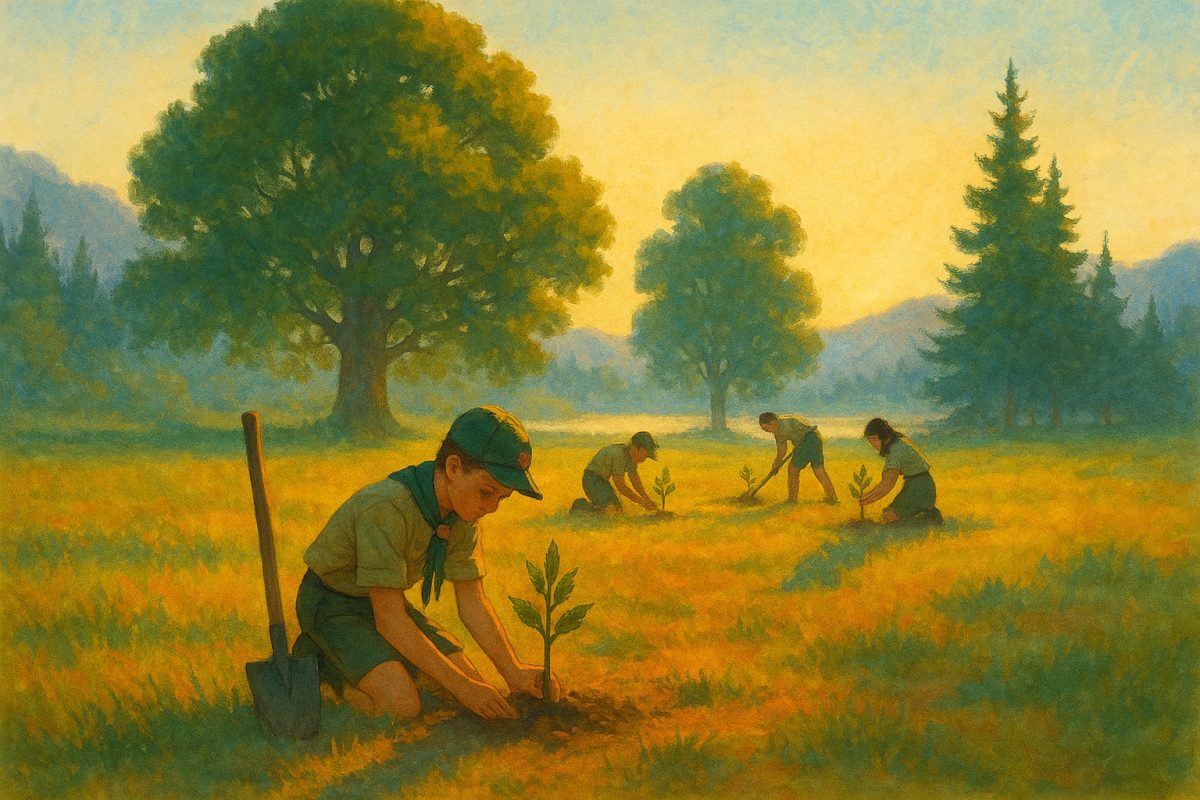
Tree plantings, trail maintenance, and cleanups improve public spaces and foster environmental stewardship. When Scouts restore a local park or create new hiking trails, they build spaces where families can connect with nature for generations. Scouting America’s conservation programs emphasize how these environmental projects teach Scouts to think beyond immediate results and consider long-term ecological health.
Many environmental Eagle Scout projects become ongoing community assets that require minimal maintenance but provide maximum benefit. A Scout who plants native trees along a watershed improves water quality, but they also create habitat for wildlife and reduce erosion for decades.
Social Support Projects
Food drives, clothing donations, and support for shelters address immediate community needs while building lasting networks of care. These projects often reveal hidden community resources and connect organizations that continue working together long after the Scout completes their service hours.
The most successful social support projects create systems rather than just providing one-time assistance. For example, when a Scout organizes a food pantry distribution system, they’re establishing processes that local organizations can replicate and expand. This systematic approach teaches Scouts to think like community leaders who solve problems at their root.
Civic Improvement Projects
Building playgrounds, installing benches, or organizing safety workshops enhance community resources in ways that benefit multiple generations. These projects require Scouts to work with local government, obtain permits, and coordinate with various stakeholders, skills that prepare them for adult civic engagement.
To see how these projects come together from start to finish, this documentary-style video follows real Eagle Scout projects and shows the community impact they create.
This Scout Life magazine video showcases several award-winning Eagle Scout projects and explains what makes them successful (16:00). The key insight is that passionate Scouts who identify genuine community needs create projects with the most lasting impact (12:00). You’ll also see how these projects require leadership skills beyond just physical work. Scouts must coordinate volunteers, obtain permissions, and communicate with community leaders (18:08).
| Project Type | Example Outcome | Lasting Benefit |
|---|---|---|
| Environmental | Park restoration | Ongoing recreation and wildlife habitat |
| Social Support | Food pantry organization | Reduced hunger, community trust networks |
| Civic Improvement | Playground construction | Safe play spaces for families |
The most impactful Scout projects address needs that community members didn’t even realize existed. When a Scout creates sensory kits for first responders to use with autistic individuals during emergencies, they’re solving a problem that affects both emergency services and families in crisis. These innovative approaches demonstrate how Scouting develops creative problem-solving skills that serve communities in unexpected ways.
Successful community projects also teach Scouts about project management, budgeting, and working with diverse groups of people. Planning an Eagle Scout project requires the same organizational skills that adult leaders use in their careers and volunteer work. This connection between Scout service and adult capability explains why former Scouts often become community leaders who continue creating positive change throughout their lives.
Empowering the Next Generation
Scouting’s influence multiplies as Scouts inspire others and take on new challenges. The leadership skills developed through Scouting create a ripple effect that extends far beyond individual advancement. According to research from Scouting America, youth who participate in Scouting develop academic skills, self-confidence, ethics, and citizenship skills that influence their adult lives.
Mentorship: Older Scouts guide younger members, passing on skills and values through hands-on teaching and example. This peer-to-peer leadership model creates a natural progression where experienced Scouts become role models and teachers. The Order of the Arrow demonstrates this youth-led approach, where young people grow, lead, and create change while learning important values like service, responsibility, and community.
Community Leadership: Many Scouts pursue leadership roles in school, local government, or service organizations. Research shows that Scouting equips youth with leadership skills by providing opportunities to lead activities, organize events, and mentor younger scouts. These experiences translate directly into real-world leadership capabilities that benefit entire communities.
Global Citizenship: Scouts participate in international projects, building cross-cultural understanding and cooperation. Through programs like World Scouting events and international service projects, Scouts develop a broader perspective on global challenges and solutions. This exposure creates leaders who think beyond their immediate communities and work toward positive change on a larger scale.
One of the most overlooked ways Scouts influence their communities is by modeling resilience and adaptability in the face of setbacks. True leadership shows in resilience. A Scout who recovers from setbacks demonstrates that commitment matters more than perfection. When a Scout persists through a challenging Eagle project that hits unexpected obstacles, or continues working toward advancement despite setbacks, they demonstrate that success comes from recovery and persistence, not perfection.
Seeing a Scout maintain their commitment after a failed fundraiser, restart a stalled community project, or help their patrol bounce back from a disappointing camping trip teaches others a crucial lesson. A resilient mindset accepts imperfection while staying focused on long-term goals. This modeling effect is particularly powerful because it shows peers, family members, and community members that setbacks are temporary and that consistent effort matters more than flawless execution.
| Leadership Development Area | Scout Experience | Community Impact |
|---|---|---|
| Mentorship Skills | Teaching younger Scouts knots and outdoor skills | Becomes peer tutor, youth coach, or volunteer leader |
| Project Management | Planning and executing Eagle Scout service project | Organizes school events, community initiatives, workplace projects |
| Resilience Modeling | Persisting through failed attempts and setbacks | Inspires others to maintain effort during difficult times |
The leadership development opportunities in Scouting America create transformative experiences that empower youth to grow, lead, and thrive in their communities. These skills compound over time, creating leaders who don’t just succeed individually but lift others up along the way.
Quick Takeaways
- Scouts develop leadership, service, and teamwork skills that last a lifetime. Research from Baylor University shows that former Scouts maintain significantly higher levels of social capital and community engagement throughout their adult lives compared to non-Scouts. The structured leadership opportunities in Scouting create real experience managing teams, making decisions under pressure, and taking responsibility for outcomes.
- Community service projects by Scouts create lasting improvements in neighborhoods and public spaces. Eagle Scout service projects alone have contributed millions of hours of community improvement, from building playgrounds and park benches to creating educational programs and organizing food drives. These aren’t just resume builders. They’re genuine solutions to local problems identified and executed by young people who care about their communities.
- Former Scouts are more likely to be active citizens, volunteers, and community leaders as adults. According to Scouting America data, at least 25 percent of service-academy cadets are former Scouts, as are some 40 percent of members of Congress and nearly 60 percent of astronauts. The habits of service and leadership formed during the Scout years don’t fade; they compound over decades of civic participation.
- Mentorship and peer leadership within Scouting help sustain positive community influence across generations. When a 16-year-old Scout teaches a 12-year-old how to tie knots or plan a campout, both learn something valuable. The older Scout practices patience and clear communication while the younger Scout sees leadership modeled up close. This cycle creates a continuous pipeline of young people who understand that helping others is essential for strong communities.
- Scouting works because it gives young people real responsibility with real consequences. When a patrol leader plans a hike and forgets the first aid kit, everyone learns why preparation matters. When a Scout organizes a service project that helps 50 families, they understand their capacity to make a difference. These experiences build confidence and competence that extends far beyond the Scout years, creating adults who see problems as opportunities to help rather than reasons to complain.
Frequently Asked Questions
How do Scouts choose their community service projects?
Scouts typically identify community needs through direct engagement with local organizations, community leaders, and residents. The process starts with observing problems in their neighborhoods, whether it’s a deteriorating park, lack of educational resources, or environmental concerns. Many Scouts reach out to nonprofits, schools, religious organizations, and municipal departments to understand where help is most needed.
According to the Eagle Scout Service Project Workbook, successful project selection balances three key factors: meaningful community impact, realistic scope for the Scout’s abilities, and clear learning opportunities. The best projects address genuine needs rather than creating work for its own sake. Adult mentors and project coaches help Scouts evaluate feasibility and connect with community partners, but the Scout must drive the selection process.
Do Scouts’ skills really last into adulthood?
Research consistently shows that Scouting creates lasting behavioral patterns that extend well beyond the teenage years. A comprehensive study published in the Baylor Institute for Studies of Religion found that former Scouts demonstrate significantly higher levels of civic engagement, community volunteering, and leadership roles compared to adults who never participated in Scouting.
The data is particularly striking when examining specific outcomes. Former Scouts are more likely to vote, serve on nonprofit boards, volunteer regularly in their communities, and take leadership positions in civic organizations. A comprehensive study identified 46 statistically significant differences between Eagle Scouts and the general population, with former Eagles showing higher rates of community involvement, charitable giving, and professional leadership throughout their adult lives.
The skills transfer because Scouting emphasizes experiential learning rather than theoretical knowledge. When Scouts practice leadership, service, and problem-solving in real situations during their youth, these behaviors become ingrained patterns that persist into adulthood.
Can one Scout really make a difference?
Absolutely. Individual Scouts regularly create changes that benefit their communities for years or even decades. The key lies not just in the immediate project impact, but in the ripple effects that follow. A Scout who builds playground equipment creates a place for children to play and often inspires others to take on similar projects.
Many Eagle Scout projects demonstrate this multiplier effect. When a Scout organizes a community garden, teaches digital literacy to seniors, or creates educational materials for local organizations, they often spark ongoing initiatives that outlast their direct involvement. The project often sparks new efforts by showing community members what is possible when someone takes initiative.
Research from George Fox University indicates that former Scouts maintain higher levels of social capital and community connection throughout their lives, suggesting that the “one Scout making a difference” pattern continues long after earning Eagle rank.
What role do adults play in supporting Scouts’ community influence?
Adult leaders serve as crucial guides who help Scouts navigate complex community relationships and project logistics without taking over the leadership role. The most effective adult mentors ask probing questions, provide resource connections, and offer technical guidance while ensuring the Scout remains the primary decision-maker and project leader.
According to Scouting America’s Guide to Advancement, adult project coaches should focus on helping Scouts develop planning skills, understand safety requirements, and connect with community partners. They provide institutional knowledge about permit processes, fundraising regulations, and volunteer coordination that most teenagers haven’t encountered before.
Adults also connect Scouts with community organizations, making introductions that help projects succeed. When a Scout approaches a nonprofit or municipal department with a project proposal, having an adult mentor who can vouch for the Scout’s commitment and the troop’s support significantly increases the likelihood of approval and resource allocation. Adult support does not replace a Scout’s leadership. Instead, it increases their ability to create meaningful change by adding credibility and resources.
Successful adult mentors guide Scouts early on but step back as youth gain confidence and leadership skills. They provide enough support to help Scouts succeed while not taking over projects themselves. As Scouts develop confidence and competence in community leadership, adult mentors let Scouts take the lead.