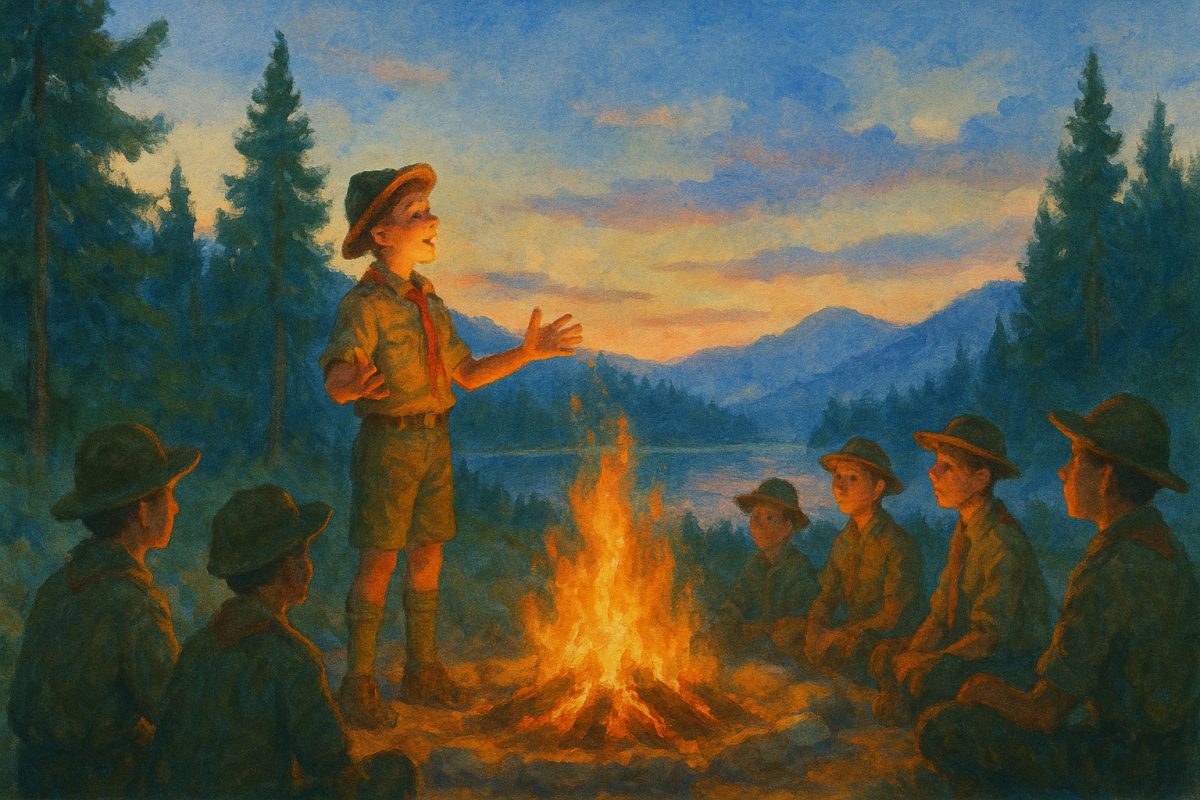
Public speaking can feel intimidating for anyone, but Scouts have a unique advantage. Through hands-on activities, leadership roles, and real-world practice, Scouting helps young people grow into confident communicators. Whether you’re leading a troop meeting, sharing a project update, or giving your first campfire speech, the skills you build here will serve you for life.
This article explores how Scouting shapes public speaking confidence, why it matters, and practical ways to grow as a speaker. You’ll find insights from research, strategies to overcome nerves, and real examples of how Scouts gain a lasting edge in communication.
Why Public Speaking Confidence Matters in Scouting
Public speaking is more than just standing in front of a group. It’s about sharing ideas, leading teams, and building trust. In Scouting, these skills show up everywhere:
- Leading patrol meetings or ceremonies
- Presenting project plans to peers and adults
- Teaching younger Scouts new skills
- Representing your troop at events or boards of review
Scouts consistently report that these experiences help them feel more comfortable speaking up, asking questions, and expressing their ideas clearly. Research shows that youth who practice public speaking develop stronger critical thinking abilities and become more self-assured in leadership situations. The gradual exposure to speaking opportunities in Scouting allows young people to build confidence naturally, starting with simple announcements and progressing to more complex presentations.
Many Scouts find that practicing announcements at troop meetings is a low-pressure way to build public speaking skills before tackling bigger presentations. The key is understanding that improvement comes from adjusting specific actions. Practice clear speech, work on eye contact, and rehearse your content until it flows naturally.
The Confidence Advantage: What Research Shows
The benefits of developing public speaking skills through Scouting extend far beyond the meeting room. Studies focusing on youth leadership development show that participants in structured programs like Scouting become more confident and positive when confronting challenges, developing the ability to manage conflict and meet personal goals.
Scouting’s focus on personal development and communication lays the groundwork for confidence in group settings and future leadership roles. The program has helped countless Scouts gain valuable skills in teamwork, communication, citizenship, and public speaking that serve them throughout their lives. Youth who participate in leadership-focused activities enhance their communication skills, boost their self-confidence, and cultivate abilities that translate directly to academic and professional success.
For over 100 years, Scouting has helped young people grow in confidence, leadership, citizenship, and ethics through hands-on practice. The regular opportunities to speak at campfires, lead discussions, and present to adult leaders create a natural progression that builds competence over time.
To help you see these skills in action and learn from experienced youth leaders, watching demonstrations can provide valuable guidance. The video below shows practical techniques that Scouts use to overcome speaking anxiety and deliver effective presentations.
This comprehensive guide covers essential speaking techniques including pacing, eye contact, and voice modulation. Eagle Scout Mac Guzman demonstrates the three-second rule for maintaining eye contact (1:30), explains how to start presentations effectively without diving in too quickly (1:45), and shows how to combine Public Speaking and Communications merit badge requirements efficiently (5:35). The video also addresses the common fear many Scouts experience when speaking publicly and provides concrete strategies for building confidence through preparation and practice.
Understanding Public Speaking Anxiety and How to Overcome It
Feeling nervous before speaking is completely normal. Research shows that around 75% of people experience some level of public speaking anxiety, with studies finding that 61% of college students rank it as their second-greatest fear. For teenagers, this anxiety can be particularly intense because of concerns about peer judgment and social acceptance.
The physical symptoms are real and noticeable. Your heart races, palms get sweaty, and your mind might go blank right when you need it most. These reactions happen because your brain perceives speaking in front of others as a threat, triggering your body’s fight-or-flight response. Understanding this helps you realize that what you’re feeling isn’t weakness. It’s simply how the body responds to stress.
Common Causes of Speaking Nerves
Most speaking anxiety stems from three core fears. The fear of making mistakes tops the list, followed closely by worry about forgetting what to say and discomfort speaking in front of unfamiliar people. These fears create a cycle where anxiety makes you more likely to stumble, which reinforces the fear for next time.
Your brain also tends to catastrophize the consequences. You imagine everyone will notice every mistake, judge you harshly, or remember your stumbles forever. In reality, audiences are generally supportive and quickly forget minor slip-ups. Most people are focused on the message you’re sharing, not hunting for errors.
| Sign of Anxiety | Simple Coping Strategy | Why It Works |
|---|---|---|
| Sweaty palms | Deep breathing before speaking | Activates your parasympathetic nervous system |
| Racing heart | Practice with a friend | Reduces fear of unfamiliar audience |
| Forgetting lines | Use note cards or outlines | Provides backup when memory fails |
| Speaking too quickly | Pause and slow down | Gives you time to think and breathe |
Building Confidence Step by Step
The most effective way to overcome speaking anxiety is through gradual exposure combined with skill building. Start with low-stakes opportunities like announcing the flag ceremony or sharing a brief patrol update. These moments let you practice without the pressure of a formal presentation.
Regular practice creates familiarity, which reduces anxiety over time. Each successful speaking experience builds evidence that you can handle these situations. Your brain starts to categorize public speaking as normal rather than threatening. Consistency is key. Speaking once a month builds more confidence than avoiding it for months and then giving one big speech.
Getting feedback accelerates your improvement. Ask trusted leaders or peers for specific observations about what worked well and what could be clearer. Recording yourself during practice speeches reveals strengths and areas to improve that you might not notice otherwise. This approach helps you notice which techniques work best and lead to clearer speaking.
Celebrating progress matters more than you might think. Acknowledge when you speak more clearly, feel less nervous, or connect better with your audience. These small wins compound over time, building the confidence foundation you need for bigger speaking challenges ahead.
How Scouting Builds Communication Skills
Scouting programs create natural opportunities for you to develop communication skills through real-world practice. Leadership positions like Senior Patrol Leader, Patrol Leader, and Instructor require you to explain ideas clearly, facilitate discussions, and motivate others, skills that transfer directly to school presentations, job interviews, and social situations.
Merit badge presentations offer another powerful training ground. When you present your Communication Merit Badge work or teach a skill to younger Scouts, you’re practicing the same fundamentals that professional speakers use: organizing information, engaging an audience, and delivering content with confidence.
Service projects push your communication skills even further. Whether you’re explaining your Eagle project to community partners or coordinating volunteers during a service day, these experiences teach you to adapt your message to different audiences and situations. Camp staff training and peer teaching roles add another layer, requiring you to break down complex skills into manageable steps that others can follow.
Scouts consistently report that these hands-on experiences transform their ability to communicate. The progression from nervous first-time speaker to confident leader happens gradually through repeated practice in supportive environments where mistakes become learning opportunities.
Experiential Learning Makes a Difference
Research confirms what Scouts experience firsthand: hands-on projects like service projects increase public speaking confidence more effectively than traditional classroom assignments. The difference lies in the authentic nature of Scouting communication. You’re not just practicing for a grade, you’re solving real problems and helping real people.
This authentic context creates what educators call “meaningful learning.” When you explain your Eagle project to potential sponsors, the stakes feel real because they are real. When you teach knot-tying to new Scouts, their success depends on your clarity. These genuine consequences motivate better preparation and more thoughtful delivery.
The social progression within Scouting also supports communication development. The natural progression in Scouting supports communication growth. Younger Scouts look up to those a few years older, and older Scouts respect the leadership of their senior peers. This creates a natural mentoring chain where communication skills are modeled, practiced, and refined at each level. As you advance through this system, you gain confidence speaking to different age groups and adapting your style to various situations.
| Activity | Communication Skill Developed |
|---|---|
| Teaching a skill at troop meeting | Explaining ideas clearly |
| Leading a campfire program | Engaging an audience |
| Presenting an Eagle project | Organizing and delivering information |
| Running a patrol meeting | Facilitating group discussion |
A strength of Scouting’s approach is that communication skills develop naturally through everyday activities. You don’t need special classes or formal training. The program structure provides countless opportunities to practice and improve.
Tools and Strategies for Growing as a Speaker
Building speaking confidence takes steady practice. With the right tools and consistent effort, you can track your growth and notice real improvement. The key is measuring where you are now, setting achievable goals, and creating an environment where growth feels natural and supported.
Measuring and Tracking Your Progress
The Personal Report of Confidence as a Speaker (PRCS) is a research-backed assessment tool that helps you understand your current comfort level with public speaking. Originally developed by G.L. Paul in 1966, this questionnaire measures specific aspects of speaking anxiety and confidence, giving you a baseline to work from.
The PRCS asks you to rate statements like “I have no fear of giving a speech” or “I feel relaxed while giving a speech” on a scale that reveals your true comfort level. What makes this tool valuable is that you can retake it every few months to see concrete evidence of your growth. Many Scouts find that seeing their scores improve over time provides the motivation to keep pushing through uncomfortable speaking situations.
Setting small, achievable goals for each speaking opportunity creates a clear path forward. Instead of aiming to become a perfect speaker overnight, focus on specific improvements. For your next troop meeting presentation, you might set a goal to make eye contact with three different people, or to speak for 30 seconds without saying “um.” Research shows that youth who track specific speaking behaviors show faster improvement than those who just “try to do better.”
| Speaking Goal Type | Beginner Example | Intermediate Example | Advanced Example |
|---|---|---|---|
| Voice Control | Speak loud enough for back row | Vary pace during presentation | Use strategic pauses for emphasis |
| Body Language | Stand up straight throughout | Use hand gestures naturally | Move purposefully around space |
| Content Organization | Include clear beginning and end | Use transitions between points | Adapt content based on audience |
Tips for Leaders and Parents
Creating regular opportunities for Scouts to speak in front of groups is the foundation of building confidence. This doesn’t mean formal presentations every week, but rather weaving speaking moments into normal troop activities. Have Scouts report on patrol activities, teach a skill they’ve mastered, or share what they learned on a recent camping trip.
Constructive feedback makes the difference between practice and improvement. Focus on one or two specific areas rather than overwhelming a Scout with everything they could do better. Comments like “Your explanation of the square knot was clear, and next time try looking at different people while you talk” give actionable direction without discouraging effort.
Recognizing improvements, not just perfect performances, helps Scouts stay motivated to continue growing. A Scout who reduces their “ums” from twenty to five deserves acknowledgment, even if their presentation wasn’t flawless. This approach builds the resilience needed for long-term growth, because true speaking confidence comes from knowing you can recover from mistakes and keep improving.
Pairing newer Scouts with experienced youth mentors for co-presentations creates a powerful learning environment for both participants. The newer Scout gets to observe confident speaking up close while sharing the pressure of being in front of the group. The experienced Scout reinforces their own skills by teaching and supporting someone else. This mentoring approach mirrors the patrol method that makes Scouting effective, where Scouts learn best from slightly older peers who remember what it felt like to be beginners.
The three-stage development model works particularly well for speaking skills. Young Scouts (11-13) focus on participating and watching role models. Middle Scouts (14-16) take on teaching roles and mentor newer members. Older Scouts (16-18) should be empowered to design and lead major presentations, like Eagle project proposals or community service presentations, where they have real agency over the content and approach.
Quick Takeaways
- Scouting offers real-world practice that builds lasting public speaking confidence. Scouting puts you in front of real audiences with meaningful content to share, unlike classroom exercises that can feel less connected. When you’re explaining a knot to younger Scouts or presenting your Eagle project to the board, you’re speaking because the information matters, not just to check a box.
- The difference between Scouting and other speaking opportunities is the built-in support system. Your troop becomes a practice ground where mistakes are learning opportunities, not failures. Communication Merit Badge requirements specifically require Scouts to serve as master of ceremonies and give presentations, creating structured opportunities to build confidence through repetition.
- Overcoming speaking nerves is possible with regular practice and support. The key insight here is understanding the relationship between your specific actions (inputs) and actual results (outputs). If you’re still nervous after “trying hard,” the input needs to change—not just the amount of effort, but the type of practice you’re doing.
- Start with low-pressure situations like explaining a skill during a patrol meeting, then gradually work up to larger audiences. Scouting America’s communication program features emphasize building self-confidence through demonstrating skills, which creates natural speaking opportunities that feel purposeful rather than forced.
- Experiential learning and leadership roles in Scouting accelerate communication skill development. When you hold positions like Senior Patrol Leader or serve on staff at summer camp, you’re using public speaking as a tool to accomplish real goals. This context makes the skill stick because it’s immediately useful.
- The Introduction to Leadership Skills training specifically focuses on communication as a core leadership competency. Scouts learn that effective speaking isn’t about being perfect. It’s about clearly conveying information that helps your team succeed.
- Tracking your progress and setting small goals makes improvement visible and rewarding. Rather than hoping you’ll magically become more confident, measure specific aspects of your speaking ability. Tools like the Personal Report of Confidence as Speaker (PRCS) help you see concrete progress over time.
- Set achievable targets for each speaking opportunity: maintain eye contact for 30 seconds, speak without filler words for two minutes, or deliver your opening without notes. Communication Merit Badge work naturally creates these incremental challenges, from giving a three-minute speech to leading a group discussion. Each small win builds the foundation for bigger speaking challenges ahead.
Frequently Asked Questions
How can I help my Scout become a more confident speaker?
The most effective approach is creating regular, low-stakes speaking opportunities within your Scout’s comfort zone. Start with small moments like sharing a camping story at dinner or explaining a merit badge project to family members. Research from youth development programs shows that consistent practice in supportive environments builds confidence more effectively than occasional high-pressure situations.
Encourage your Scout to volunteer for speaking roles during troop meetings, such as reading announcements, leading the Pledge of Allegiance, or giving brief activity reports. According to the Youth Public Speaking Self-Efficacy research, young people who practice regularly in familiar settings develop stronger speaking confidence than those who only speak when required.
What if my child is very anxious about public speaking?
Public speaking anxiety affects up to 75% of the population, so your Scout is definitely not alone. The key is gradual exposure combined with specific skill-building. Start with one-on-one conversations about Scouting activities, then progress to speaking with small groups of friends or family members.
Break down speaking tasks into manageable pieces rather than expecting full presentations right away. For example, have your Scout practice just the opening sentence of a patrol report, then gradually add more content as comfort increases. The Practice Space confidence-building research demonstrates that systematic desensitization works better than forcing anxious speakers into high-pressure situations.
Consider pairing your Scout with a speaking buddy during troop activities. Many Scouts find it easier to share speaking responsibilities initially, which reduces individual pressure while still building skills.
Are public speaking skills from Scouting useful outside of Scouts?
Absolutely. The communication skills developed through Scouting activities translate directly to academic, professional, and social situations. Scouts consistently report that their troop speaking experience helps them participate more confidently in class discussions, job interviews, and community leadership roles.
The Great Rivers Council research on confidence-building shows that Scouts who regularly practice public speaking during their youth demonstrate higher leadership engagement in college and early career settings. The structured, supportive environment of Scouting provides ideal conditions for developing these transferable skills.
Many Eagle Scouts specifically credit their troop speaking experience with helping them succeed in college presentations, workplace meetings, and community volunteer leadership. The combination of regular practice and constructive feedback creates lasting confidence that extends well beyond Scouting activities.
What resources can I use to measure my speaking confidence?
Several practical tools can help track your Scout’s progress and identify areas for improvement. The Personal Report of Confidence as a Speaker (PRCS) scale is a research-validated questionnaire that measures speaking anxiety and confidence levels over time.
For a simpler approach, create a weekly reflection checklist covering key areas like voice volume, eye contact, and content organization. Track specific behaviors rather than general feelings. Did your Scout make eye contact with at least three people, speak loudly enough for the back row to hear, and complete their planned points?
The Ohio State 4-H public speaking resources include practical self-assessment tools that work well for Scouts. Consider keeping a simple speaking log where your Scout records each speaking opportunity, what went well, and one specific area to improve next time.
Remember that progress isn’t always linear. Some weeks will show clear improvement while others might feel like setbacks. The key is consistent measurement over months rather than expecting dramatic changes after individual speaking experiences.