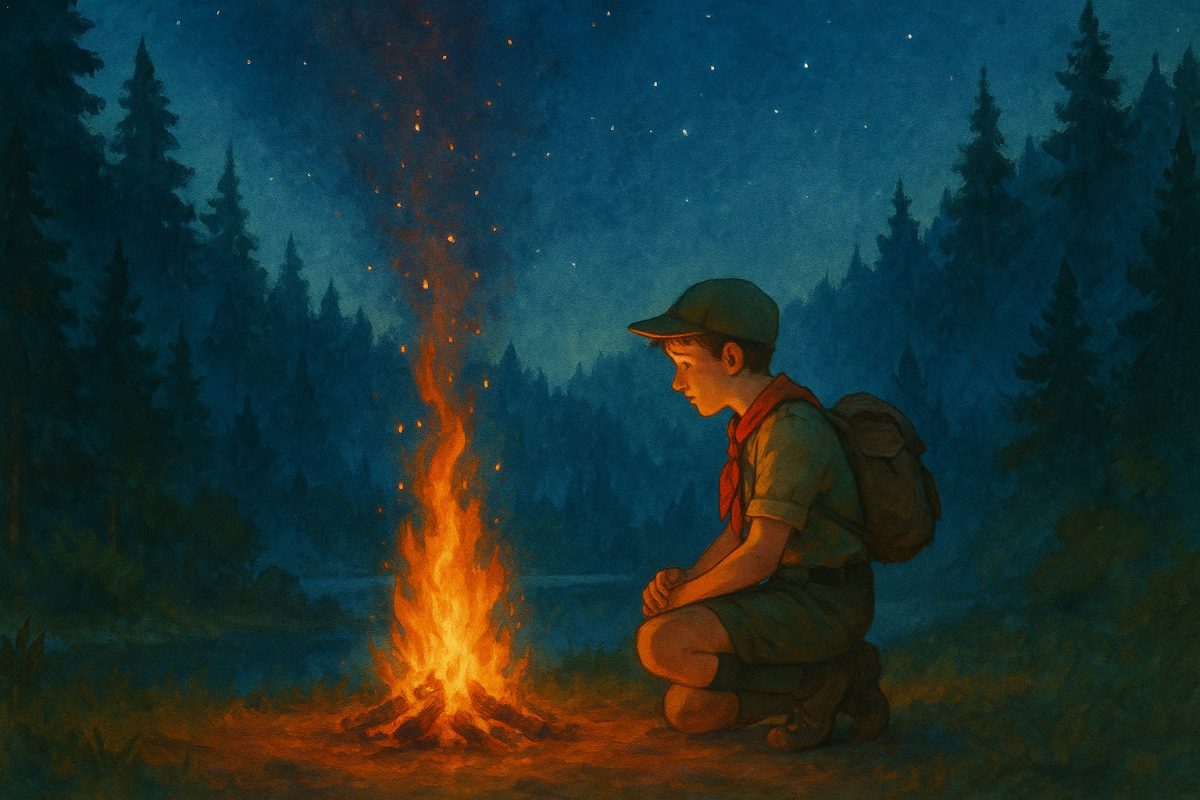
Campfires are a tradition in Scouting and outdoor adventures, but there’s a lot more to building a good fire than just stacking some wood and lighting a match. Understanding the science behind fire building helps you stay safe, protect the environment, and get the most out of every campfire experience. In this article, you’ll learn how fires start, what makes them burn, and how scientists study fire behavior to keep people and nature safe.
Whether you’re preparing for your first campout or looking to improve your fire-building skills, this guide covers the basics and the advanced science that shapes every flame. You’ll find tips for building efficient, safe campfires and insights into how fire research impacts everything from air quality to wildfire prevention.
What Makes a Fire Burn? The Science of Combustion
A campfire starts with a simple chemical reaction called combustion. For a fire to ignite and keep burning, three things are needed:
- Fuel: Something to burn, like wood or charcoal
- Heat: Enough energy to start the reaction (like a match or lighter)
- Oxygen: Air to feed the flames
This combination is called the fire triangle. If one part is missing, the fire goes out. According to fire science research, when you strike a match, heat breaks down the wood, releasing gases that react with oxygen. These reactions release more heat, which keeps the fire going.
Understanding this science helps you troubleshoot campfire problems. If a fire keeps going out, one element of the triangle is missing. Your wood may be too wet, your airflow too limited, or your initial heat too low to keep it burning.
To see exactly how the fire triangle works in action, watch this clear explanation of combustion science:
The video demonstrates how each element of the fire triangle contributes to combustion and shows practical examples of how removing any single element extinguishes a fire (0:12). You’ll also see how different fuel types work together in a well-built campfire, starting with small twigs and leaves before adding larger logs (1:08).
Types of Fuel and Their Role
Not all fuel burns the same way. The key to a successful campfire is using the right fuel in the right order:
- Tinder: Small, dry materials that catch fire easily (dry grass, pine needles, birch bark)
- Kindling: Slightly larger sticks that burn longer than tinder (pencil-thick to thumb-thick twigs)
- Fuelwood: Large pieces that sustain the fire (wrist-thick logs and larger)
Each fuel type has a different ignition temperature and burn rate. Tinder ignites quickly but burns fast. Kindling burns longer and creates enough heat to ignite fuelwood. Fuelwood burns slowly and provides the sustained heat that keeps your campfire going for hours.
Choosing the right materials and arranging them properly helps fires start quickly and burn efficiently. Fire building success comes from understanding how tinder, kindling, and fuelwood work together. If your fire struggles, check whether you gathered enough of each type and added them in the right order.
Dry fuel is essential. According to the Scouting America Outdoor Code, you should always “be conservation-minded” when gathering firewood. Look for dead branches still attached to trees. These are usually drier than wood on the ground. Test your tinder by trying to break it with your hands; if it snaps cleanly, it’s dry enough to use.
How Campfires Behave: Heat Transfer and Flame Dynamics
Once a fire is burning, it spreads heat in several ways that directly affect how your campfire performs. Understanding these heat transfer methods helps you build better fires and manage them more effectively throughout your camping experience.
Heat leaves a campfire in three main ways: convection, conduction, and radiation. Convection occurs when hot air rises, carrying heat upward and outward from the flames. This rising hot air creates a natural draft that pulls cooler air in from the sides to feed the fire with fresh oxygen. Conduction transfers heat through solid materials, like when one log heats up another log it’s touching. Radiation sends heat in all directions from the flames as electromagnetic energy that you can feel on your face and hands when sitting around the fire.
Researchers studying fire behavior have found that convection plays the most critical role in sustaining campfires. The rising hot gases create a continuous cycle that draws in the oxygen needed to keep combustion going. This is why fires naturally want to burn upward and why you feel the strongest heat above the flames rather than to the sides.
To build an efficient campfire, you must understand how these heat transfer methods work together. When you place logs too close together, you restrict airflow and limit convection. When logs are spaced properly, convection can move freely while conduction still allows heat to transfer between pieces of wood. A common mistake is packing wood too tightly, which actually smothers the flames by preventing the natural airflow that feeds the fire.
The spacing between your logs creates channels for air to flow through, which directly affects how hot and clean your fire burns. A small gap between logs improves airflow and makes the fire burn hotter and cleaner. This airflow principle applies whether you build a teepee, log cabin, or lean-to style fire. The trick is finding the balance between having logs close enough for conduction to work but far enough apart for convection to happen.
Radiation becomes more noticeable as your fire grows larger and hotter. This is the heat you feel warming your face when you sit around the campfire in the evening. Unlike convection, which moves heat upward, radiation spreads heat in all directions from the flame source. This radiant heat is what makes campfires effective for warming people and cooking food, even when you’re not directly above the flames.
| Method | How It Works | Effect on Fire |
|---|---|---|
| Convection | Hot air rises | Spreads flames upward and outward |
| Conduction | Heat through solids | Ignites touching wood |
| Radiation | Heat in all directions | Warms people and surroundings |
Fire dynamics also depend on the interaction between these heat transfer methods and your fuel arrangement. When you add a new log to an established fire, conduction from the existing burning wood begins heating the new piece. Meanwhile, convection carries hot gases around the new log, heating it from multiple angles. Radiation from the flame zone provides additional heat that helps bring the new fuel up to its ignition temperature.
Understanding these principles helps you troubleshoot common campfire problems. If your fire keeps dying down, check whether your logs are packed too tightly and restricting convection. If new wood won’t catch fire, make sure it’s positioned where conduction, convection, and radiation can all work on it effectively. The science behind heat transfer gives you the tools to build fires that start easily and burn consistently.
Environmental Factors: Weather, Fuels, and Fire Spread
The way a campfire burns depends on more than just the wood you use. Scientists have shown that weather conditions, fuel type, and even the shape of the ground can change how fires behave. Research from the National Park Service and fire behavior experts reveals that understanding these environmental factors is essential for safe and effective campfire management.
Wind is one of the most important environmental factors affecting campfire behavior. Even a gentle 5-10 mph breeze can dramatically increase oxygen supply to your fire, making flames burn hotter and spread faster than expected. The National Park Service identifies wind as “one of the most important factors” in fire behavior because it not only feeds the flames with oxygen but can also carry burning embers significant distances from the original fire.
Humidity plays an equally important role in campfire success. When relative humidity drops below 30%, fuels become much more receptive to ignition and fires spread more rapidly. Conversely, high humidity levels above 60% can make it challenging to start fires, as moisture in the air prevents dry tinder from catching easily. This is why experienced campers often struggle to start fires on foggy mornings or after recent rainfall.
Topography creates another layer of complexity in fire behavior. Fires naturally burn faster uphill because heat rises, preheating fuels above the flame front. A fire moving uphill can spread up to three times faster than the same fire on flat ground. This principle applies even to small campfires. If you’re camping on a slope, position your fire ring on level ground or slightly downhill from your campsite to prevent unexpected spread.
Before starting a campfire, check the wind direction and speed. Even a gentle breeze can carry sparks farther than you think, especially in dry conditions. Match your campfire setup to the current environmental conditions. Consider wind, humidity, slope, and fuel type before lighting a fire. If the wind is gusting above 15 mph, consider postponing your campfire or choosing a more sheltered location.
Fuel type determines not just how your fire burns, but how it responds to environmental conditions. Hardwoods like oak and maple burn steadily and produce consistent heat, making them less susceptible to wind fluctuations. Softwoods like pine and fir ignite quickly but burn irregularly, creating more sparks and embers that wind can carry. Understanding your fuel’s characteristics helps you predict how environmental factors will affect your specific fire.
The Canadian Forest Fire Weather Index system demonstrates how professionals account for these interconnected factors. Temperature, humidity, wind speed, and recent precipitation all combine to create an overall fire danger rating. While you won’t need complex calculations for your campfire, the same principles apply. Multiple environmental factors work together to influence fire behavior.
| Factor | Effect on Fire | Scout Action |
|---|---|---|
| Wind (5-15 mph) | Increases spread, oxygen supply | Check direction, clear wider area |
| Low Humidity (<30%) | Faster ignition, rapid spread | Extra water nearby, smaller fire |
| High Humidity (>60%) | Dampens ignition, slows burn | More tinder, longer lighting time |
| Uphill Slope | Fires move uphill 3x faster | Build on level ground or downhill |
Successful fire management requires a realistic assessment of current conditions. If conditions include high winds, very dry weather, or steep slopes, the safest choice is to skip the campfire.
Campfire Smoke and Health: What You Need to Know
Campfire smoke can cause eye irritation, breathing problems, and long-term health risks. It’s a serious health concern that every Scout should understand. The smoke from any wood fire, whether it’s your troop’s campfire or distant wildfires, contains fine particulate matter (PM2.5) that can penetrate deep into your lungs and even enter your bloodstream. According to the EPA, these microscopic particles pose the greatest health risk from smoke exposure.
The health effects start immediately and can build over time. Short-term exposure causes eye, nose, and throat irritation, along with coughing and difficulty breathing. For Scouts with asthma or other respiratory conditions, even small amounts of smoke can trigger serious symptoms. The CDC warns that long-term exposure to wildfire smoke has been linked to more serious conditions including lung damage, heart problems, and even cognitive effects.
Campfire smoke can travel far from its source, sometimes for hundreds of miles. Research shows that smoke particles can be carried thousands of kilometers from their source, meaning poor air quality can affect your camping trip even when fires are nowhere in sight. This is why checking air quality reports should be part of your pre-trip planning, just like checking the weather forecast.
To better understand the serious health impacts of smoke exposure, this documentary explains how wildfire smoke affects your body and what you can do to protect yourself:
The video breaks down how tiny smoke particles penetrate your respiratory system (0:47) and explains both immediate symptoms and long-term health risks (1:30). Most importantly for Scouts, it covers practical protection methods like proper mask use and indoor air filtration (3:20) that can make the difference between a safe outdoor experience and a health emergency.
The key to protecting yourself and your troop lies in understanding the relationship between your fire-building choices and the smoke they produce. Burning dry, seasoned hardwood creates less smoke than green or softwood. Maintaining proper airflow with a well-built fire structure reduces incomplete combustion, which is what creates most of the harmful particles. Even the size of your fire matters. Smaller fires burn more efficiently and produce cleaner combustion.
| Wood Type | Smoke Production | Health Impact |
|---|---|---|
| Green/Wet Wood | Heavy, thick smoke | High particulate matter, more irritation |
| Seasoned Hardwood | Light, minimal smoke | Lower emissions, cleaner burn |
| Treated/Painted Wood | Toxic smoke | Chemical exposure, never burn |
When air quality is poor due to wildfires or other factors, health authorities recommend wearing N95 masks outdoors and keeping windows closed in buildings. For Scout troops, this might mean moving activities indoors or postponing outdoor events entirely. Camping during smoky conditions should be reconsidered. Even healthy Scouts can have breathing problems from fine particles.
Prevention starts with smart fire management. Keep your campfires small and well-ventilated, position yourself upwind when possible, and never burn trash, treated wood, or anything other than clean, dry wood. Following proper campfire safety protocols not only prevents wildfires but also minimizes the smoke exposure for everyone around the fire. The goal is to build a fire that meets your needs while keeping everyone safe and healthy.
Fire Safety and Prevention: Science-Backed Best Practices
Research on fire behavior helps us build safer campfires and prevent wildfires. Fire scientists use mathematical models that analyze three critical factors: fuel, weather, and topography to predict how fires might spread. These same principles that help firefighters contain massive wildfires also guide us in managing our campfires responsibly.
The Fire Behavior Triangle shows how fuel type, moisture content, wind speed, and terrain slope all interact to determine fire intensity and spread rate. When you understand these factors, you can make better decisions about where and when to build your campfire.
Clear an area at least 10 feet around your campfire. This creates a defensible space that prevents fire from jumping to nearby vegetation. Remove all flammable materials including dry leaves, pine needles, and overhanging branches. The National Park Service emphasizes that even small embers can travel surprising distances in windy conditions.
Never leave a fire unattended. Fire behavior can change rapidly based on shifting wind patterns and fuel moisture levels. What starts as a controlled campfire can quickly become dangerous if conditions change while you’re away. Always designate someone to watch the fire when others step away.
Keep water and a shovel nearby to put out the fire. Water cools the burning material below its ignition temperature, while a shovel helps you stir ashes and separate burning materials. Having both tools within arm’s reach means you can respond immediately if the fire starts to spread beyond your fire ring.
Fully extinguish fires with water, stirring ashes until cool. Pour water slowly to avoid creating steam that could burn you. Stir the ashes with your shovel to expose any hidden embers, then add more water. The Forest Service reports that many escaped campfires reignite from embers that can remain hot for hours after the visible flames disappear.
After putting out your campfire, use the back of your hand to feel for heat above the ashes. If you feel warmth, keep adding water and stirring. Many fires reignite from hidden embers that weren’t properly extinguished. This simple heat test has prevented countless wildfires that could have started from seemingly dead campfires.
Modern fire prediction models used by agencies like FRAMES incorporate real-time weather data, fuel moisture readings, and topographic analysis to forecast fire danger levels. These same scientific principles apply to your campfire. Dry conditions, strong winds, and steep terrain all increase fire risk. Check local fire restrictions before building any fire, and choose your campsite location based on these factors.
Safe campfires start with good preparation, constant supervision, and thorough extinguishing. To ensure a safe camping experience, Scouts must prepare campfires properly, pay attention to fires at all times, and put fires out safely and completely. There’s no shortcut to fire safety. Each step in the process serves a specific scientific purpose in preventing fire spread.
Quick Takeaways
- Fire science is the foundation of every safe campfire you’ll ever build. Understanding these core principles helps you make better decisions in the field and keeps your troop safe during outdoor adventures.
- The fire triangle forms the basis of all combustion. Fire needs three elements to exist: fuel, heat, and oxygen. Remove any one of these, and the fire goes out. This simple concept guides everything from lighting your camp stove to fully extinguishing your campfire.
- Fire behavior depends on three main factors that scientists call the “fire behavior triangle.” Fuel type, weather conditions, and topography all determine how fires start, spread, and behave. Dry grass burns differently than wet logs. Wind changes everything. Hills and valleys create their own fire patterns.
- Campfire smoke affects air quality and can harm your health, especially if you have asthma or other breathing conditions. Smoke contains particles and chemicals that irritate your lungs. Position yourself upwind when possible, and never lean directly over a fire.
- Scientific models help firefighters and land managers predict fire behavior. These computer models use data about fuel moisture, wind speed, and terrain to forecast how fires might spread. The same principles apply to your campfire. Understanding conditions helps you build safer fires.
- Always follow established fire safety guidelines to protect people and the environment. The techniques you learn as a Scout are proven methods based on decades of fire science research. Master the inputs (proper clearing, constant supervision, complete extinguishing) to get the right outputs (safe, controlled fires that don’t escape or reignite).
Frequently Asked Questions
What is the fire triangle?
The fire triangle describes the three essential elements needed for any fire to exist: fuel, heat, and oxygen. Remove any one of these three components, and the fire will go out. This simple model helps Scouts understand both how to build fires safely and how to extinguish them completely.
Fuel can be anything combustible—wood, paper, gasoline, or even the fabric of your tent. Heat provides the energy to start the chemical reaction, whether from a match, lightning, or friction. Oxygen feeds the combustion process, which is why blowing on embers helps a fire grow and why smothering flames puts them out.
How does weather affect campfires?
Wind, humidity, and temperature dramatically change how fires behave. Wind carries oxygen to feed flames and can spread burning embers to new fuel sources, making fires burn hotter and spread faster. High winds can turn a controlled campfire into a dangerous situation within minutes.
Humidity affects how easily materials ignite and burn. Dry conditions with low humidity create perfect fire conditions. Your kindling lights easily, but so does everything else around your campsite. High humidity makes starting fires more challenging but also reduces the risk of accidental spread.
Temperature influences both ignition and fire behavior. Hot, dry days require extra caution because materials are already closer to their ignition point. Cold weather might make fire-starting more difficult, but it also means less risk of uncontrolled spread.
Is campfire smoke dangerous?
Yes, campfire smoke contains particles and chemicals that can harm your health, especially for people with asthma, allergies, or other lung conditions. Wood smoke contains fine particles that can irritate your eyes, nose, throat, and lungs. Even healthy people can experience coughing, shortness of breath, or chest tightness from prolonged exposure.
The type of wood you burn matters. Burning treated lumber, painted wood, or trash releases toxic chemicals that are far more dangerous than natural wood smoke. Stick to seasoned hardwoods like oak, maple, or hickory for the cleanest burn.
To minimize smoke exposure, position yourself upwind from the fire when possible. If smoke consistently blows toward your seating area, adjust the fire’s airflow by rearranging logs or moving to a different spot.
What’s the safest way to put out a campfire?
Pour water slowly over the entire fire area, including all embers and ashes. Stir the wet ashes with a shovel or stick to expose any hidden hot spots, then add more water. Repeat this process until everything is cool to the touch—literally cool enough that you can hold your hand near the ashes without feeling heat.
Never leave a fire unattended, even for a few minutes. The “pour, stir, pour again” method ensures complete extinguishing. Some Scouts think covering a fire with dirt works, but soil can actually insulate hot coals and keep them burning underground for hours.
Always carry enough water to your campfire site before you light it. A good rule is to have at least twice as much water as you think you’ll need for extinguishing. This preparation prevents the temptation to leave a fire burning because you don’t want to walk back to the water source.
How do scientists study fire behavior?
Researchers use three main approaches: controlled laboratory experiments, computer modeling, and field observations. In labs, scientists can precisely control variables like fuel moisture, wind speed, and temperature to understand how each factor affects fire behavior.
Computer models simulate fire spread across different landscapes and weather conditions. These models help predict where wildfires might go and how fast they’ll move, allowing firefighters and emergency managers to make better decisions about evacuations and resource deployment.
Field research involves studying actual fires in progress, using specialized equipment to measure temperature, wind patterns, and fuel consumption rates. Scientists also examine burn patterns after fires to understand how different factors influenced the fire’s path and intensity.
This research directly benefits outdoor enthusiasts and Scouts. The fire behavior principles scientists discover help create better safety guidelines for campfires, prescribed burns, and wildfire prevention. Understanding these scientific insights makes you a more responsible fire user and helps protect the natural areas where we love to camp and hike.